

What I Learned while working on an Elixir App
by Atul Bhosale,
Recently, I was working on writing a background worker using Elixir for one of our clients. This post is about what I learned while writing the worker.
Adding decimal numbers
I tried addition for Decimal type, the same way as we do Integers like:

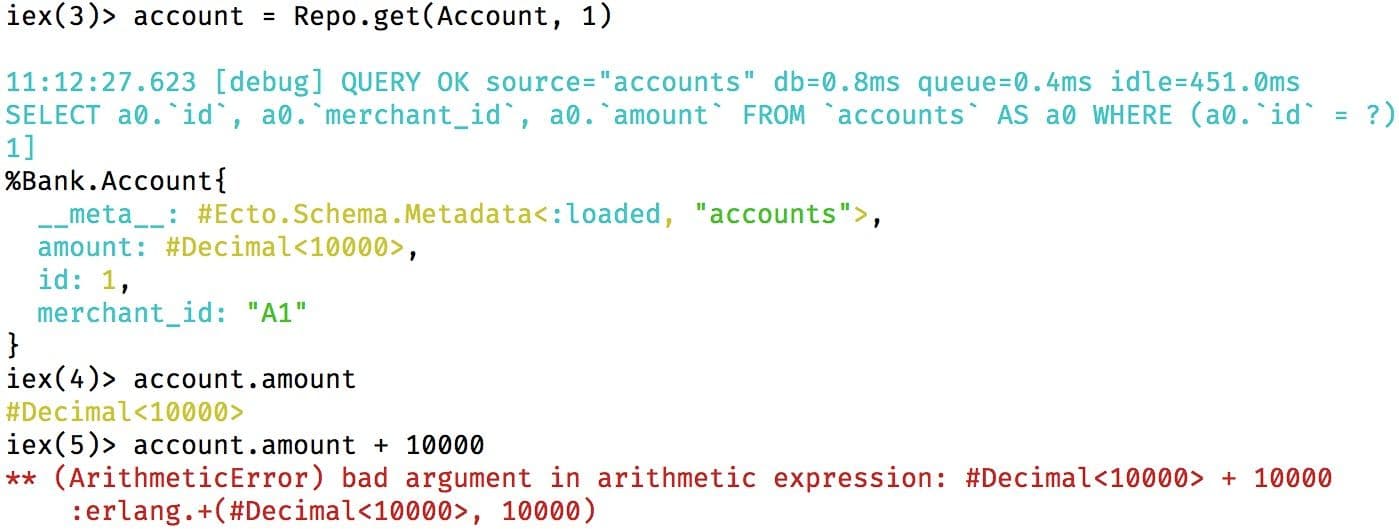
It raises an Arithmetic error since Decimal has an underlying struct:
[%Decimal{coef: coefficient(), exp: exponent(), sign: sign()}][decimal-struct]
I checked the decimal library & I found that it has an add function to add Decimal or integer values. Hence the addition can be done as follows:

Comparing decimal values
Integer comparison can be done with == operator.
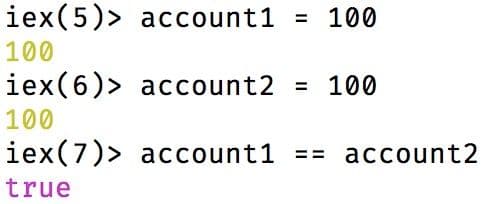
How about Decimal?
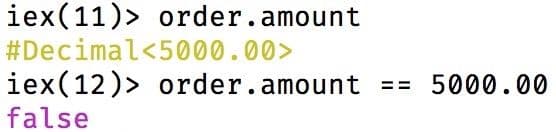
It returns false since the value on RHS(Right-hand-side) of == operator is not a decimal.
I tried using Decimal.new as follows:
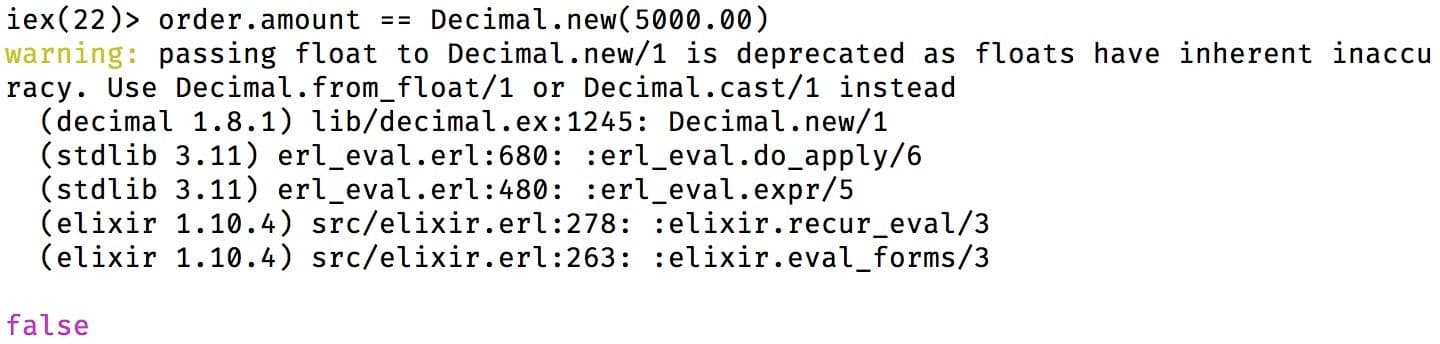
Based on the warning message I tried using Decimal.from_float & Decimal.cast as follows:
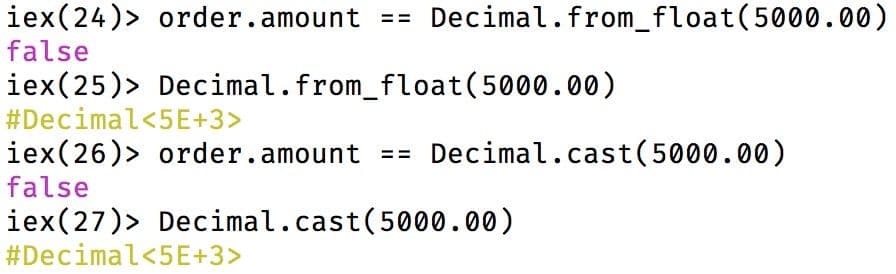
but that too returns false.
I then tried to pass a string to Decimal.new as follows:

and it worked.
Approach using find_in_batches
While working on a business use case to fetch the pending orders & to process them. The code would be as follows:
  defp orders_query() do
    from(order in Order,
      where: order.status == ^@pending
    )
  end

  def perform do
    orders_query()
    |> Repo.all()
    |> Enum.each(fn order ->
       update_order(order)
    end)
  end
The above code will load all the records at once in the memory. I decided to search for something which will be similar to find_in_batches from Rails in Elixir and I found this discussion.
The updated code will be as follows:
  def perform do
      Repo.transaction(fn ->
        orders_query()
        |> Repo.stream()
        |> Enum.each(fn order ->
           update_order(order)
        end)
      end)
  end
I have used Repo.stream which by default fetches the records in batches of 500 & it needs to be wrapped in a transaction.
Recursion
In the above approach, I faced an issue. When the time taken to update the records exceeds the timeout, Ecto would raise a timeout error which I have described here.
I solved it by using recursion as follows:
  @batch_size 500

  def perform do
    remaining_records_count()
    |> iterate_multiple_times()
  end

  defp remaining_records_count do
    orders_query()
    |> Repo.aggregate(:count)
  end

  defp iterate_multiple_times(count) when count <= @batch_size,
    do: make_account_balance_available()

  defp iterate_multiple_times(_count) do
    make_account_balance_available()

    remaining_records_count()
    |> iterate_multiple_times()
  end
In the above code, the iterate_multiple_times/1 is a recursive function which calls
itself until there aren't any remaining records.
I hope you will find these learnings helpful while building any app/library using Elixir.